Brake Caliper Replacement Cost in Ontario (And How to Tell If Yours Is Seized)
What a brake caliper costs in Ontario
Caliper replacement runs roughly $250 to $500 per side around here, and that sits on top of whatever the pads and rotors cost on that corner. That's the Southwestern Ontario market range, not a price list.
Why the spread is that wide: a caliper for a 2014 Civic and a caliper for a loaded three-quarter-ton pickup are not the same part, and some vehicles need an electronic parking brake retracted before the old one comes off. Labour matters too. Independent shops between Puslinch, Guelph and Cambridge generally run about $110–$150 an hour. Dealers sit closer to $150–$220.
Here's the part most cost pages skip. Nobody can tell you what your caliper job costs over the phone, because nobody knows yet whether you need a caliper. Plenty of cars booked in for a seized caliper leave with clean, re-greased slide pins and the same caliper they arrived with. The wheel has to come off first. If you want the wider picture on pads, rotors and fluid, that's in our brake repair cost breakdown for Ontario.
Cost table: pin service vs replacement
| Job | Ballpark |
|---|---|
| Slide pin service (clean bores, new boots, high-temp grease) | Labour plus a small hardware kit. A fraction of a replacement, and often done while the pads are off anyway. |
| Caliper replacement, per side | Roughly $250–$500, on top of the pad and rotor work on that corner |
| Pads, rotors and caliper on one corner | The brake work for that corner with the caliper range stacked on top |
None of those are posted prices. They're what the market looks like across Southwestern Ontario, so you can sanity-check a quote you're already holding. Your car gets its own firm number once it's inspected.
How to tell a caliper is seized
Match your symptoms against this. A seized or sticking brake caliper usually shows up as:
- The car pulls to one side when you brake, and tracks straight otherwise. A pull that's there all the time is more likely a tire or a steering and suspension issue. A collapsed brake hose can cause the same pull as a sticking caliper, which is why it gets checked on the hoist instead of guessed at.
- One wheel is noticeably hotter than the other three after a drive. Hold your hand near each wheel after you park. One radiating heat while the rest are warm is your suspect.
- A hot-metal or faint burning smell at the end of a trip, strongest at one corner.
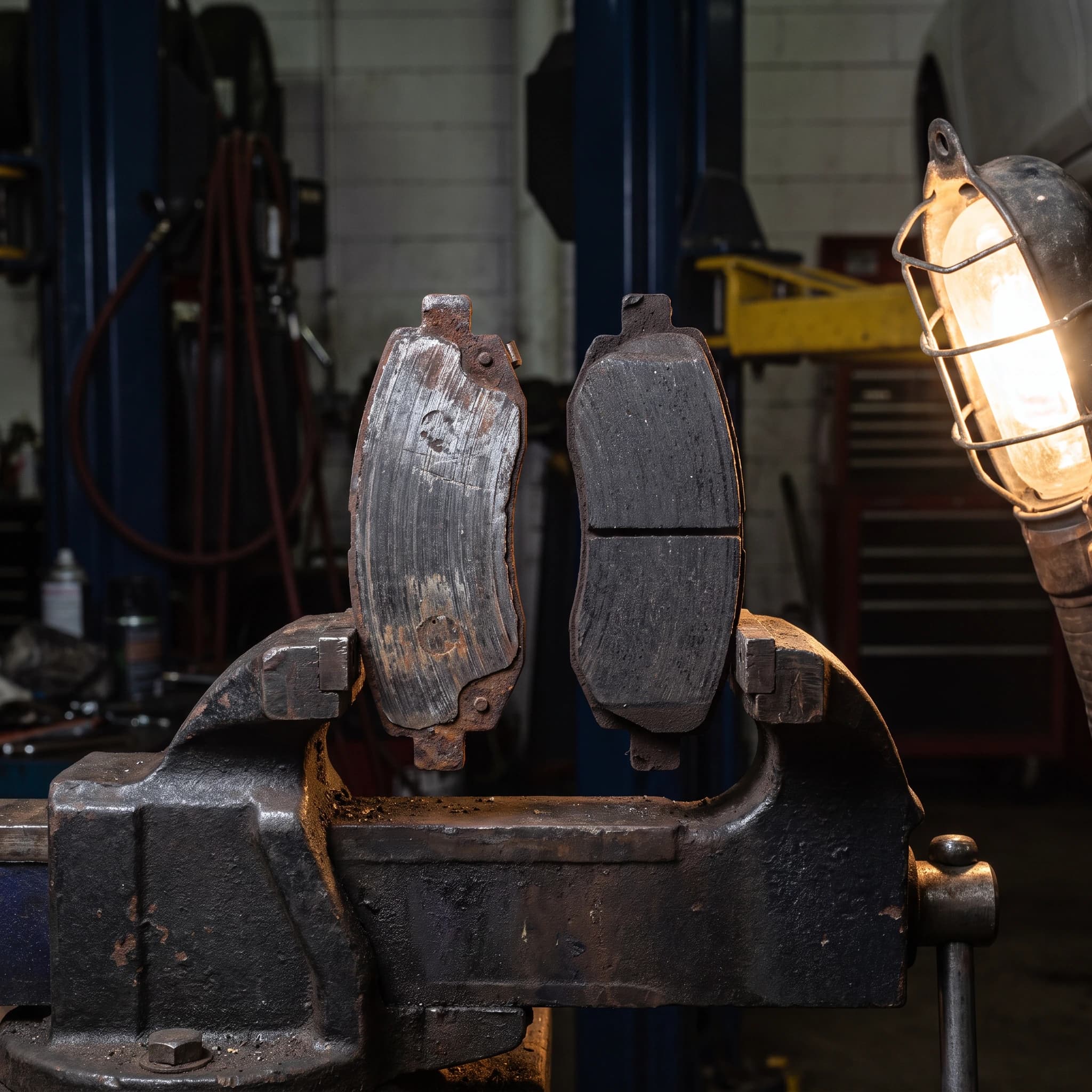
- One pad worn down to the backing plate while the pad on the other side still looks near-new. That's the clearest tell there is.
- The car feels like it's dragging. Soft on acceleration, coasts badly, fuel economy slipping with no other explanation.
- Brakes that stick after the car has sat a few days, then release with a clunk on the first stop.
Grinding and squealing are a separate conversation. Those point at pads and rotors more often than calipers, and we wrote about brake noises and what each one means already.
Slide pins, piston or bracket
Seized caliper covers three different failures with three different price tags.
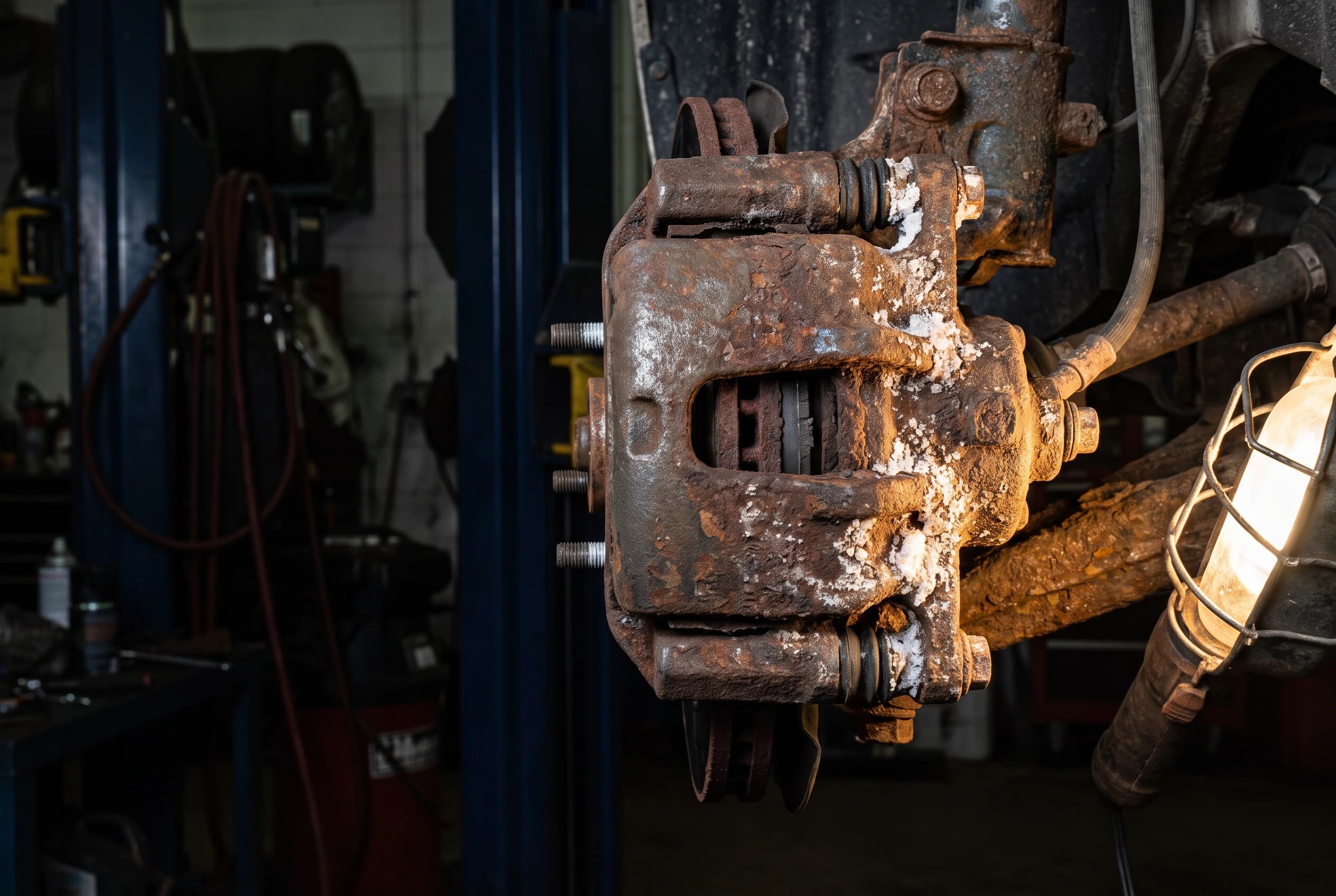
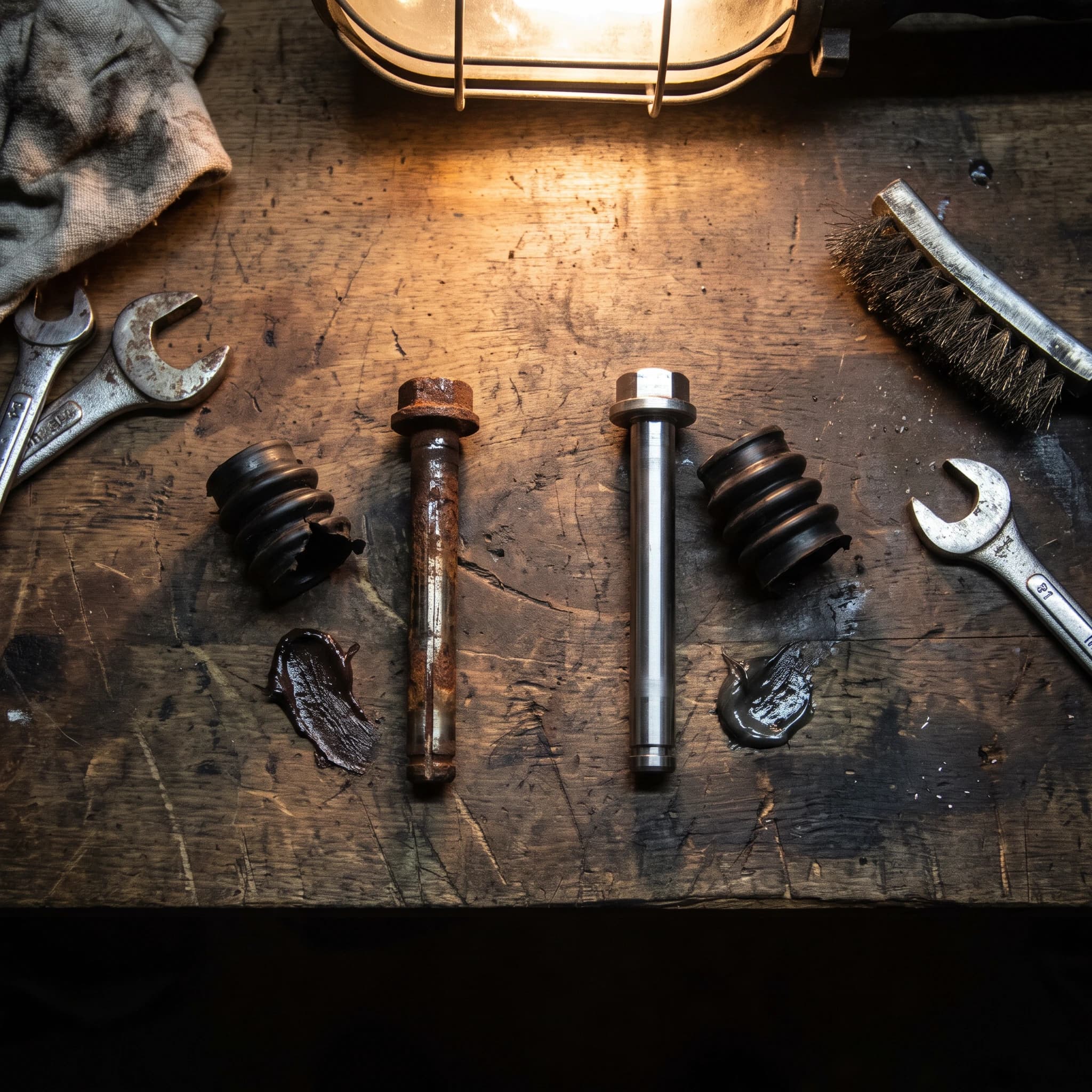
The slide pins. On a floating caliper, the whole body slides on two greased pins so the outer pad can press against the rotor. Rust and dried grease in the pin bores stop that slide. The piston still pushes the inner pad, so the inner pad does all the work and wears out while the outer one looks nearly new. This is by far the most common one, and it's usually serviceable.
The piston. Corrosion on the piston or a swollen, deteriorated seal means it extends but won't fully retract. The pad stays pressed against the rotor all the time. That's the wheel still hot an hour after you park, the one that smells. A piston that won't release, or a bore pitted past cleaning, means the caliper goes.
The bracket and hardware. The pads ride in abutment clips on the caliper bracket. Rust scale builds up behind those clips and pinches the pad so it can't move in its slot. Cleaning the abutments and fitting new clips often sorts it, and no caliper needs to change hands.
The wear pattern tells you most of what you need to know. Uneven pad wear with a free-moving piston usually points at pins or hardware. A wheel that runs hot and still drags after it has cooled down usually points at the piston.
Why road salt seizes calipers here
Salt. That's the short answer.
Brine off the 401 and the back roads between Guelph, Puslinch and Cambridge gets thrown into the wheel wells all winter, works past the rubber pin boots, and sits in the pin bores. Then Ontario does its freeze-thaw thing, and the rust that forms under the old grease expands and locks the pin in place. A few salt seasons in, a pin that was never cleaned is a candidate.
There's an opposite problem that surprises people. On hybrids and EVs, regenerative braking does most of the slowing, so the friction brakes barely get used. Parts that don't move rust in place. A 30,000 km hybrid can have a seizing pin while a work truck with triple the mileage is fine, because the truck's brakes get worked hard enough to keep everything sliding and the rust scrubbed off. That's why brakes on EVs and hybrids are worth checking on a schedule instead of waiting for something to feel wrong.
Can it wait, or is it a now problem?
Now problem. A pad worn through to the backing plate. A wheel hot enough to smell. Any pull strong enough that you're correcting the wheel under braking. Get it looked at before the next long drive, because a dragging brake cooks the fluid at that corner and can glaze or crack a rotor, which turns a modest job into a bigger one.
Soon problem. A pin that's slightly sticky, brakes that grab a little on the first stop after the car's sat in the driveway all weekend, a small difference in wheel temperature. Book it for next week and keep an eye on it.
Don't wait at all if the pedal has gone long or spongy, or if you see fluid on the inside of a wheel. That's a hydraulic problem, not just a sticky one. Brakes jump the queue here, so it's usually in this week either way.
When cleaning fixes it and when it doesn't
Plenty of seized calipers are just seized pins. Pull them, clean the bores, fit new boots and high-temp grease, reassemble, and the caliper works like it should. If yours can be safely reused, we say so. We replace what's worn, not what's convenient.
What actually forces a replacement:
- The piston won't retract, or won't push evenly
- A torn piston boot, or a bore pitted past the point cleaning helps
- Fluid weeping at the piston seal or the bleeder
- A pin bore worn oval, or threads stripped out of the bracket
Any shop should be able to put the part in your hand and show you which of those it is. Ask to see it. Uneven pad wear is visible from three feet away, and a pitted piston bore is obvious once you're looking at it.
On replacing in pairs: that's a judgement call made after both sides are inspected, not a rule. Two calipers on the same axle have lived through the same winters, so if one's gone the other is worth a hard look. Sometimes the second one is fine and gets left alone. We fit Textar, Raybestos and Bosch brake parts, the wheels come off, the parts get measured, and you see the worn pieces before you approve a firm number.
Caliper questions we get at the counter
How much does it cost to replace a brake caliper in Ontario?
Roughly $250–$500 per side in Southwestern Ontario, on top of the pad and rotor work on that corner. The spread comes down to the vehicle, whether there's an electronic parking brake motor involved, and the shop's labour rate. Independents around here are about $110–$150 an hour, dealers about $150–$220.
Can I drive with a seized brake caliper?
Short trips to get it looked at, usually. Not a highway run, and not if a pad is down to the backing plate or the wheel is hot enough to smell. A dragging brake builds heat that cooks the fluid at that corner and can damage the rotor, and braking is uneven while it's happening. If the pedal has gone soft or you see fluid at the wheel, don't drive it.
Do brake calipers need to be replaced in pairs?
Not automatically. It's an inspection judgement. Both calipers on an axle have seen the same salt and the same mileage, so when one fails the other gets a hard look. If the second one slides freely, holds pressure and has an intact boot, there's no reason to touch it.
Can a seized caliper be freed up instead of replaced?
Often, yes, when the problem is the slide pins or the pad hardware rather than the piston. Cleaning the bores, new boots and high-temp grease brings a lot of them back, and it costs well under a replacement. A seized piston, a torn boot or a weeping seal is a different story. The caliper has to go.
What causes a brake caliper to seize?
Road salt and moisture getting into the slide pin bores and past the boots, then freeze-thaw rust locking the pin in place. Dried-out or wrong-spec grease does it too. Rust scale behind the pad abutment clips can pinch a pad so it won't move. And on hybrids and EVs, under-use is its own cause: friction brakes that never work hard enough to stay clean seize from sitting.
How long do brake calipers last?
In a dry climate, often the life of the car. In Ontario, with salt every winter, it's less predictable. Plenty of original calipers are still working fine many years in, and others seize early on a vehicle whose pins have never been cleaned. Servicing the pins when the pads are replaced does more for caliper life than anything else.
Get a straight answer on yours
If you're holding a caliper quote and you're not sure the part actually needs replacing, bring the car in. Wheels come off, parts get measured, you see what's worn, and you get a firm number before anything starts. Sometimes the answer is that your pins just need cleaning, and that's a cheaper day than you expected.
Quality Lube & Tires is at 288 Brock Rd S in Puslinch (Aberfoyle), right off the 401 at the Brock Rd exit. About 15 minutes from Guelph or Cambridge, 20 from Milton, 25 from Kitchener. Family owned since 2008, 4.7 stars on Google. Call the shop, or request a time online and we'll call to confirm it, and brake work gets slotted in ahead of the regular queue.
We tell you when you don't need the work.
Request a time and the receptionist calls you back, usually the same day. You get a firm price before anything starts.
More on brake service, or our pages for brakes in Guelph and brakes in Cambridge.